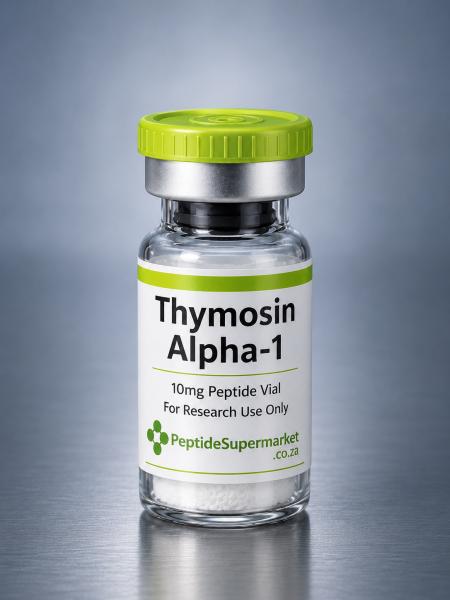
Live prices from 13 SA suppliers, from R605.00, compared side by side so you never overpay.
Copy the code — you'll paste it at checkout.
with our exclusive code
You're about to visit an external supplier
with our exclusive code
By clicking "Continue", you acknowledge that you understand and accept the above. Read our full disclosure.
Try removing a filter or two to widen the search.
Try removing a filter or two to widen the search.
More ways to compare Thymosin Alpha-1
Different views of the same live SA pricing, tuned for how you like to shop.
Compare another peptide
All purchases are made directly from third-party suppliers; your relationship is solely with them. We accept no liability for the quality, purity, or legality of any products listed.
We may earn a commission when you click through to a supplier and make a purchase. This does not affect pricing information displayed.
By using this site you accept responsibility for ensuring purchases comply with applicable laws in your jurisdiction. Read our full disclosure.
Synthetic Thymic Hormone | Immune System Modulator
Thymosin Alpha 1 is a synthetic 28-amino acid peptide identical to naturally occurring thymic hormone, studied in 11,000+ patients across 30+ clinical trials with less than 1% serious adverse events. Approved in 35+ countries for immune modulation.
Activates TLR pathways, enhances T-cell maturation, stimulates NK cells, and modulates dendritic cell function via systemic circulation. Injectable route achieves 90-95% bioavailability with 2-hour peak time.
?SDAAVDTSSEITTKDLKEKKEVVEEAEN
Ac
Position 1
Serine
Position 2
Aspartic Acid
Position 3
Alanine
Position 4
Alanine
Position 5
Valine
Position 6
Aspartic Acid
Position 7
Threonine
Position 8
Serine
Position 9
Serine
Position 10
Glutamic Acid
Position 11
Isoleucine
Position 12
Threonine
Position 13
Threonine
Position 14
Lysine
Position 15
Aspartic Acid
Position 16
Leucine
Position 17
Lysine
Position 18
Glutamic Acid
Position 19
Lysine
Position 20
Lysine
Position 21
Glutamic Acid
Position 22
Valine
Position 23
Valine
Position 24
Glutamic Acid
Position 25
Glutamic Acid
Position 26
Alanine
Position 27
Glutamic Acid
Position 28
Asparagine
Position 29
FDA orphan designation for DiGeorge syndrome; restores T-cell function.
Improved antibody responses in elderly and hemodialysis patients (H1N1, COVID-19).
Restores CD4+ counts and reduces opportunistic infections.
Reduces pro-inflammatory cytokines TNF-α, IL-1β, IL-6 by 40-60%.
Enhanced antiviral efficacy when combined with interferon.
Helps manage inflammatory autoimmune conditions.
Restores immune function after surgical stress.
Manages immune suppression from intense training.
Supports thymus gland function with aging.
Delays age-related immune decline in elderly populations.
Subcutaneous injection is the primary route with 90-95% bioavailability. Standard dosing is 1.6mg twice weekly.
| Goal | Dose | Frequency | Route |
|---|---|---|---|
| Standard immune support | 1.6mg | 2x weekly | SubQ |
| Acute conditions (sepsis) | 1.6mg | 2x daily for 5 days, then daily | SubQ/IM |
| Cancer/hepatitis support | 1.6mg | 2x weekly | SubQ |
| Maintenance/prevention | 1.6mg | 2x weekly | SubQ |
Intranasal spray with limited data. Requires compounding pharmacy preparation with 40-60% bioavailability vs injectable.
| Goal | Dose | Frequency | Route |
|---|---|---|---|
| General support | 500mcg per nostril | 2x daily | Nasal spray |
| Enhanced support | 1000mcg per nostril | 2x daily | Nasal spray |
| Maintenance | 500mcg per nostril | 1x daily | Nasal spray |
Fatal graft rejection risk in transplant patients - contraindicated.
Pharmacodynamic antagonism possible.
Enhanced antiviral efficacy in hepatitis treatment.
Enhances vaccine immunogenicity.
Protective against bone marrow damage.
Initial immune system activation
Enhanced immune function, reduced infection risk
Maximum immunomodulatory benefits
Sustained immune support with continued use
30% vs 11% mortality reduction in severe cases; lymphocyte restoration.
1,106 patients; mixed overall results but subgroup benefits in elderly/diabetic populations.
40-60% reduction in pro-inflammatory cytokines (TNF-α, IL-1β, IL-6).
11,000+ patients, 30+ trials; <1% serious adverse events.
Plain-English guides and study summaries from published literature.
Be the first to know when prices drop on your favourite peptides
No spam. Unsubscribe anytime. We respect your privacy.