Live prices from 27 SA suppliers, from R375.00, compared side by side so you never overpay.
Copy the code — you'll paste it at checkout.
with our exclusive code
You're about to visit an external supplier
with our exclusive code
By clicking "Continue", you acknowledge that you understand and accept the above. Read our full disclosure.
Try removing a filter or two to widen the search.
Try removing a filter or two to widen the search.
More ways to compare Semax
Different views of the same live SA pricing, tuned for how you like to shop.
Compare another peptide
All purchases are made directly from third-party suppliers; your relationship is solely with them. We accept no liability for the quality, purity, or legality of any products listed.
We may earn a commission when you click through to a supplier and make a purchase. This does not affect pricing information displayed.
By using this site you accept responsibility for ensuring purchases comply with applicable laws in your jurisdiction. Read our full disclosure.
Synthetic ACTH Analog | Nootropic & Neuroprotective Peptide
Semax is a synthetic heptapeptide derived from adrenocorticotropic hormone (ACTH) fragment 4-10, originally developed in Russia for stroke recovery. It achieves enhanced CNS penetration through direct transport via olfactory epithelium and trigeminal nerves, bypassing the blood-brain barrier.
Rapidly increases BDNF levels, modulates dopaminergic and serotonergic systems, and achieves direct brain delivery through olfactory transport with 0.093% blood-brain barrier penetration (vs 0.01% IV).
MEHFPGP
Methionine
Position 1
Glutamic Acid
Position 2
Histidine
Position 3
Phenylalanine
Position 4
Proline
Position 5
Glycine
Position 6
Proline
Position 7
Improved short-term and working memory performance in fatigued individuals (71% vs 41% accuracy).
Enhanced sustained attention during demanding cognitive tasks.
Faster acquisition of new information and improved retention.
Accelerated rehabilitation with increased BDNF levels in stroke patients.
Supports recovery from traumatic brain injury.
Shows anti-amyloid properties in Alzheimer's models.
Supports neurogenesis through increased brain-derived neurotrophic factor.
Enhanced neural connections and brain network activity.
Improved ability to cope with cognitive stress.
Intranasal is the primary and most effective route, providing direct brain delivery through olfactory transport. Onset 15-30 minutes, peak 1-2 hours, duration 4-6 hours.
| Goal | Dose | Frequency | Route |
|---|---|---|---|
| Cognitive enhancement | 300-600mcg | 1-2x daily | Intranasal spray/drops |
| Intensive cognitive support | 600-900mcg | 2-3x daily | Intranasal |
| Brain injury recovery | 900-1500mcg | 2-3x daily | Intranasal |
Subcutaneous injection provides reliable dosing. Onset 30-60 minutes, peak 2-4 hours, duration 6-8 hours.
| Goal | Dose | Frequency | Route |
|---|---|---|---|
| Research protocol | 500-750mcg | 1x daily | SubQ |
| Intensive protocol | 750-1000mcg | 1-2x daily | SubQ |
Do NOT use simultaneously. Choose one or the other - they are variants of the same peptide.
Complementary anxiolytic effects; popular combination.
Both support neuroplasticity through different mechanisms.
Comprehensive neuroprotection when combined.
May enhance stimulant effects - monitor carefully and reduce stimulant doses.
Theoretical monoamine system risk; use caution.
Initial cognitive clarity and focus enhancement, possible mild nasal sensation
Improved attention span during demanding tasks
Enhanced memory consolidation, stable mood
Peak cognitive benefits with improved stress resilience and mental flexibility
Gradual baseline return over 3-7 days; some benefits persist
ACS Chemical Neuroscience
Demonstrated anti-amyloid properties with potential Alzheimer's applications.
Neuroscience Research Reviews
Updated review of BDNF enhancement mechanisms.
Clinical Pharmacology Research
Intranasal administration achieves 0.093% blood-brain barrier penetration versus 0.01% with intravenous.
Human study with 250-1000mcg intranasal single dose showed 71% accuracy on memory tests vs 41% in controls.
110 patients with ischemic stroke showed increased BDNF levels correlated with early rehabilitation when using Semax with conventional therapy.
24 healthy middle-aged participants showed increased fMRI default mode network activity relative to placebo.
Rat focal ischemia model showed Semax affected expression of 96 genes related to immune and vascular systems.
Plain-English guides and study summaries from published literature.
 Guides
6 min
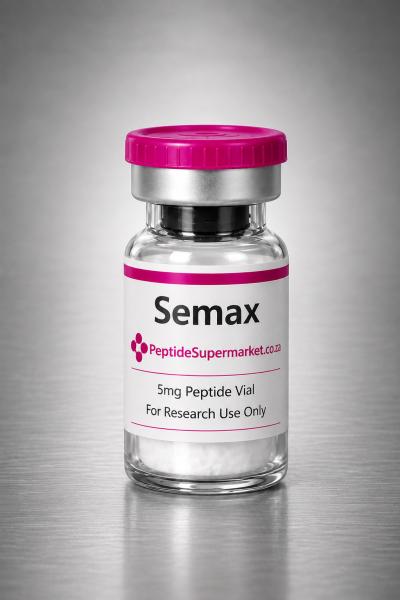
Semax is a synthetic ACTH-derived heptapeptide studied for focus, memory, BDNF signalling and neuroprotection. This guide explains what the research discussion supports and where caution is needed.
Read article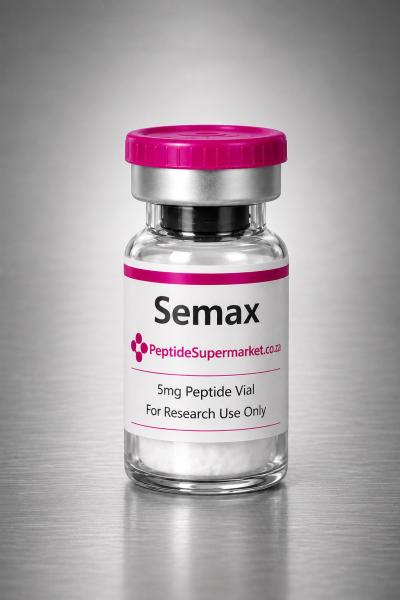 Guides
7 min
Semax is a synthetic ACTH-derived heptapeptide studied for BDNF signalling, memory, attention and neuroprotection. This guide explains what the research focus means and where the limits are.
Read articleBe the first to know when prices drop on your favourite peptides
No spam. Unsubscribe anytime. We respect your privacy.