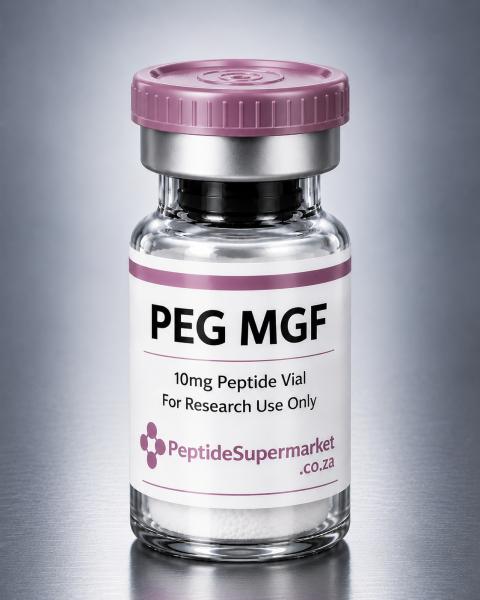
Live prices from 3 SA suppliers, from R550.00, compared side by side so you never overpay.
Copy the code — you'll paste it at checkout.
with our exclusive code
You're about to visit an external supplier
with our exclusive code
By clicking "Continue", you acknowledge that you understand and accept the above. Read our full disclosure.
Try removing a filter or two to widen the search.
Try removing a filter or two to widen the search.
More ways to compare PEG MGF
Different views of the same live SA pricing, tuned for how you like to shop.
Compare another peptide
All purchases are made directly from third-party suppliers; your relationship is solely with them. We accept no liability for the quality, purity, or legality of any products listed.
We may earn a commission when you click through to a supplier and make a purchase. This does not affect pricing information displayed.
By using this site you accept responsibility for ensuring purchases comply with applicable laws in your jurisdiction. Read our full disclosure.
Pegylated Mechano Growth Factor | IGF-1 Splice Variant
Modified IGF-1 variant with PEG attachment extending half-life from minutes to hours. Activates muscle satellite cells following mechanical stress or injury.
Activates muscle satellite stem cells via receptor binding, stimulating MAPK/ERK signaling. Enhances protein synthesis and promotes muscle fiber repair. E-peptide domain exhibits distinct activity from mature IGF-1.
YQPPSTNKNTKSQRRKGSTFEEHK
Primary mechanism activating dormant muscle satellite cells which fuse to damaged fibers.
Increases proliferative lifespan in younger muscle progenitor cells.
Increases activated satellite cell fusion capacity supporting repair and hypertrophy.
Animal studies suggest improved Achilles tendon injury outcomes.
Rabbit models demonstrated faster healing via osteoblast regulation.
Research indicates potential for articular cartilage injury models.
Naturally upregulated after mechanical stress; supplementation may enhance processes.
Localized injection near injury sites supports targeted tissue repair.
Subcutaneous or intramuscular administration; post-workout timing aligns with natural MGF upregulation.
| Goal | Dose | Frequency | Route |
|---|---|---|---|
| General Recovery | 200mcg | 2-3x weekly | SubQ or IM |
| Targeted Muscle Recovery | 200-400mcg | Post-workout, 2-3x weekly | IM bilateral near target muscle |
| Injury Recovery | 200-400mcg | 2-3x weekly | IM near injury site |
| Conservative Protocol | 100-200mcg | 2x weekly | SubQ |
Both target IGF-1 pathways; combining risks receptor overstimulation. Reduce doses significantly if combined.
HGH increases endogenous IGF-1/MGF. Combined use amplifies effects but monitor for excessive water retention and joint pain.
Complementary mechanisms. BPC-157 promotes angiogenesis; PEG-MGF activates satellite cells. Popular recovery stack.
TB-500 reduces inflammation and promotes cell migration; PEG-MGF activates muscle stem cells.
Both affect glucose metabolism. Monitor blood sugar carefully if combined.
Different regenerative pathways may enhance tissue repair through multiple mechanisms.
Reduced muscle soreness post-workout; subtle recovery improvements
Enhanced recovery between training; potential injury-related discomfort reduction
Optimal muscle repair effects; improved training capacity from better recovery
Benefits persist several weeks as tissue repair continues
Landmark study demonstrating MGF significantly increased satellite cell proliferation at 3ng/ml (P<0.001) with age-dependent effects.
MGF overexpression modulated inflammatory cytokines and enhanced macrophage resolution during skeletal muscle injury recovery.
Overview of MGF as IGF-I gene product involved in tissue repair, highlighting upregulation following exercise and injury.
Plain-English guides and study summaries from published literature.
Be the first to know when prices drop on your favourite peptides
No spam. Unsubscribe anytime. We respect your privacy.