Live prices from 38 SA suppliers, from R380.00, compared side by side so you never overpay.
Copy the code — you'll paste it at checkout.
with our exclusive code
You're about to visit an external supplier
with our exclusive code
By clicking "Continue", you acknowledge that you understand and accept the above. Read our full disclosure.


Compare 4 prices for Mots-C. Cheapest: R380.00. Average: R449.75.
| Compare | Visit | |||||||
|---|---|---|---|---|---|---|---|---|

Helix Collective
Best
Mots-C 5mg |
R380.00 | R76.00/mg | In Stock | R170.00 |
—
|
— | ||
|
Mots-C 5mg |
R459.00 | R91.80/mg | In Stock | R250.00 |
—
|
— | ||
|
Mots-C 5mg |
R460.00 | R92.00/mg | In Stock | R170.00 |
—
|
— | ||
|
Mots-C 5mg |
R500.00 | R100.00/mg | In Stock | Free over R2,000 |
—
|
— |
More ways to compare Mots-C
Different views of the same live SA pricing, tuned for how you like to shop.
Compare another peptide
All purchases are made directly from third-party suppliers; your relationship is solely with them. We accept no liability for the quality, purity, or legality of any products listed.
We may earn a commission when you click through to a supplier and make a purchase. This does not affect pricing information displayed.
By using this site you accept responsibility for ensuring purchases comply with applicable laws in your jurisdiction. Read our full disclosure.
Mitochondrial-Derived Peptide | Metabolic Regulator
MOTS-c is a mitochondrial-derived peptide that operates as a mitohormone through the Folate-AICAR-AMPK pathway. Under metabolic stress, it translocates to the nucleus to bind stress-response transcription factors (NRF2, ATF1/ATF7), regulating genes involved in metabolism and cellular adaptation.
Inhibits the folate cycle leading to AMPK activation. Under metabolic stress, translocates to nucleus to bind stress-response transcription factors, regulating genes involved in metabolism, insulin sensitivity, and cellular adaptation.
MRWQEMGYIFYPRKLR
Methionine
Position 1
Arginine
Position 2
Tryptophan
Position 3
Glutamine
Position 4
Glutamic Acid
Position 5
Methionine
Position 6
Glycine
Position 7
Tyrosine
Position 8
Isoleucine
Position 9
Phenylalanine
Position 10
Tyrosine
Position 11
Proline
Position 12
Arginine
Position 13
Lysine
Position 14
Leucine
Position 15
Arginine
Position 16
Improves insulin sensitivity by ~30% in animal studies through AMPK activation.
Restores metabolic function via insulin receptor sensitization.
Promotes fatty acid oxidation despite identical caloric intake.
Reverses age-dependent physical decline in animal models.
Enhances mitochondrial function via PGC-1α activation.
6.4% median lifespan extension observed in mice studies.
12-15% improvement in running performance from single dose in studies.
Exercise induced 11.9-fold increase in skeletal muscle MOTS-c.
Supports muscle recovery and adaptation to exercise.
Subcutaneous injection is the primary route. Optimal administration is morning before exercise. AMPK activation occurs within 30 minutes.
| Goal | Dose | Frequency | Route |
|---|---|---|---|
| Metabolic health | 5-10mg | Once daily | SubQ |
| Anti-aging protocol | 15mg | 3x weekly | SubQ |
| Exercise performance | 10-15mg | Pre-workout | SubQ |
| Conservative start | 5mg | Once daily | SubQ |
Both activate AMPK; monitor for additive hypoglycemic effects.
Complementary mitochondrial enhancement through different pathways.
Different mechanisms allow safe combination.
Both are AMPK activators; monitor for additive effects.
Complementary SIRT1/AMPK activation pathways.
May require dose adjustments to prevent hypoglycemia.
AMPK pathway activation; initial glucose tolerance improvements
Enhanced exercise capacity; improved insulin sensitivity
Sustained metabolic benefits; potential body composition changes
Maximum mitochondrial function enhancement; metabolic flexibility
Ophthalmology Research
Dose-dependent protective effects on retinal cells in AMD models.
Cell Metabolism
Prevented obesity, improved insulin sensitivity by ~30% in high-fat diet mice.
Nature Communications
Enhanced physical performance across age groups; exercise induced 11.9-fold increase in skeletal muscle MOTS-c.
Cell Metabolism
Nuclear translocation within 30 minutes under metabolic stress.
Physiological Reports
Single dose improved running time 12%, distance 15%.
Pharmacological Research
Alleviated hyperglycemia in gestational diabetes model.
Plain-English guides and study summaries from published literature.
 Guides
8 min
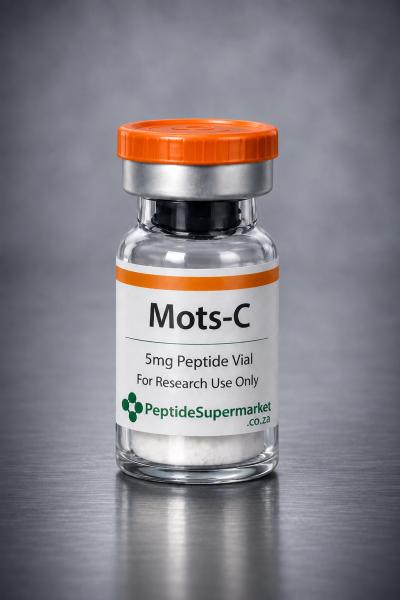
MOTS-c is a mitochondrial-derived peptide studied for metabolic signalling, insulin sensitivity, mitochondrial function and exercise performance. Here is what current research-focused discussion supports, and where caution is needed.
Read article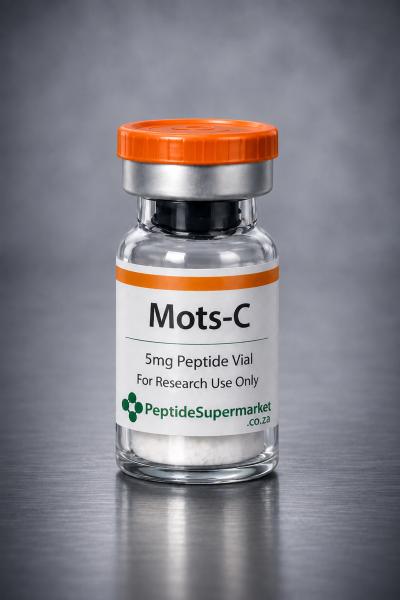 Guides
8 min
MOTS-c is often discussed in relation to energy, metabolism and mitochondrial signalling. Early fatigue should be interpreted cautiously, not assumed to be proof that it is working.
Read article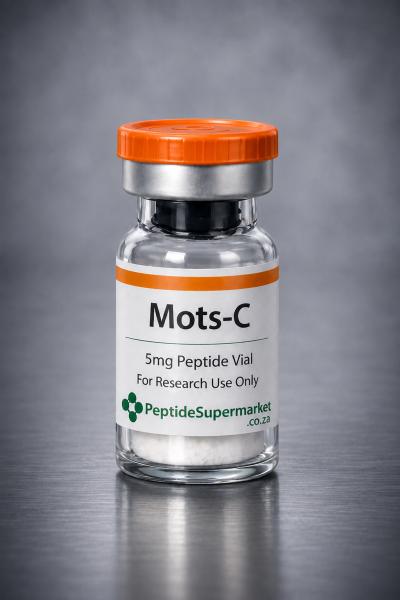 Guides
8 min
MOTS-c is a mitochondrial-derived peptide studied for metabolic adaptation, insulin sensitivity, exercise performance and ageing. Here is what the research says, and what it does not yet prove.
Read article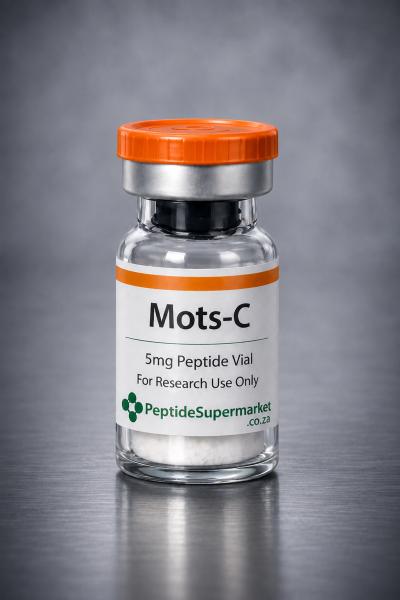 Guides
8 min
MOTS-c is studied for metabolic signalling and mitochondrial function, but that does not mean it should feel like a stimulant. Fatigue reports need careful context.
Read articleBe the first to know when prices drop on your favourite peptides
No spam. Unsubscribe anytime. We respect your privacy.