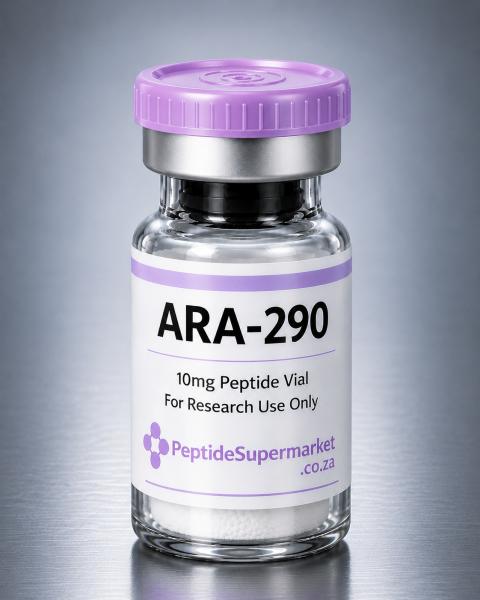
Live prices from 6 SA suppliers, from R380.00, compared side by side so you never overpay.
Copy the code — you'll paste it at checkout.
with our exclusive code
You're about to visit an external supplier
with our exclusive code
By clicking "Continue", you acknowledge that you understand and accept the above. Read our full disclosure.
Try removing a filter or two to widen the search.
Try removing a filter or two to widen the search.
More ways to compare ARA-290
Different views of the same live SA pricing, tuned for how you like to shop.
Compare another peptide
All purchases are made directly from third-party suppliers; your relationship is solely with them. We accept no liability for the quality, purity, or legality of any products listed.
We may earn a commission when you click through to a supplier and make a purchase. This does not affect pricing information displayed.
By using this site you accept responsibility for ensuring purchases comply with applicable laws in your jurisdiction. Read our full disclosure.
Tissue-Protective Peptide | Innate Repair Receptor Agonist
Ara 290 is an engineered 11-amino acid peptide activating the Innate Repair Receptor (IRR) to provide tissue-protective effects without red blood cell stimulation. Has FDA Orphan Drug status.
Activates IRR through EPOR/β-common receptor complex, triggering tissue-protective signaling without erythropoietic effects.
?ELERALNSS
pGlu
Position 1
Glutamic Acid
Position 2
Leucine
Position 3
Glutamic Acid
Position 4
Arginine
Position 5
Alanine
Position 6
Leucine
Position 7
Asparagine
Position 8
Serine
Position 9
Serine
Position 10
23% increase in corneal nerve fiber area with sustained pain improvement.
Nerve regeneration and metabolic improvements in Type 2 diabetes patients.
Crosses blood-brain barrier for stroke and TBI neuroprotection.
Improves epithelialization and angiogenesis via VEGF upregulation.
Reduces infarct size in myocardial infarction models.
Maintains cardiac function in aging models.
Reduces TNF-α, IL-6, and IL-12 production.
Reduces colitis severity in animal models.
Improves graft survival and reduces rejection.
Primary clinical administration route with proven efficacy.
| Goal | Dose | Frequency | Route |
|---|---|---|---|
| Neuropathy Treatment | 4 mg daily | Once daily | SubQ |
| Tissue Protection | 1-8 mg daily | Once daily | SubQ |
| Acute Intervention | 2 mg | 3x weekly | IV |
Complementary tissue repair pathways may enhance wound healing.
Combined mechanisms enhance recovery from injury.
No known interactions; different mechanisms for tissue protection.
Clinical trials exclude EPO use within 2 months due to receptor interference.
Both affect cellular metabolism; monitor for additive effects.
No adverse interactions in clinical trials with GLP-1 agonists.
Both affect tissue repair; requires monitoring for excessive growth factor activity.
6-month washout required before Ara 290 to avoid immune interactions.
Initial anti-inflammatory effects and mild pain symptom improvement
Progressive nerve regeneration, improved tissue healing markers
Peak therapeutic effects, maximum nerve fiber density improvements
Long-lasting benefits via molecular switch effect
64 patients, 1-8 mg SC daily for 28 days: 23% increase in corneal nerve fiber area at 4 mg dose.
48 patients, 4 mg SC daily for 28 days: Sustained HbA1c improvement and nerve regeneration.
9 patients, 4 mg SC daily for 12 weeks: Improved quality of life; good safety profile.
Preclinical mouse model, 24 μg/kg IV single dose: Reduced infarct size and improved survival.
Rat stroke model, 300 μg/kg IV single dose: Reduced stroke volume; BBB penetration confirmed.
Plain-English guides and study summaries from published literature.
Be the first to know when prices drop on your favourite peptides
No spam. Unsubscribe anytime. We respect your privacy.